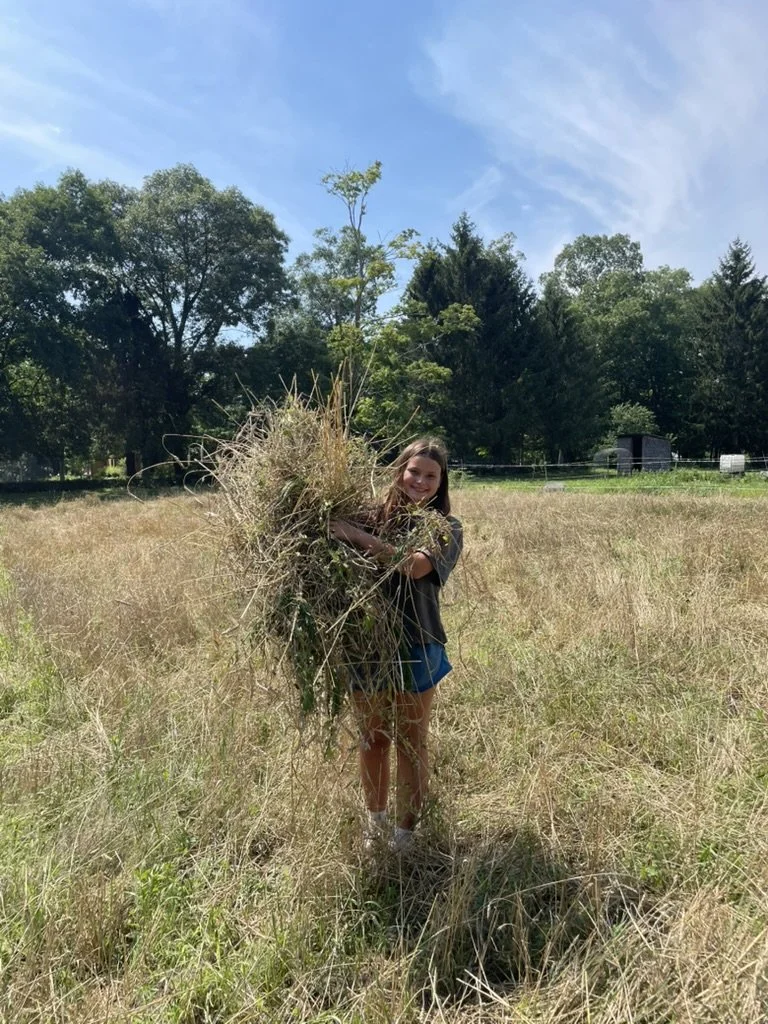
Looking back on a BIG summer!
Members Only Quarterly Newsletter — 2026 Q3
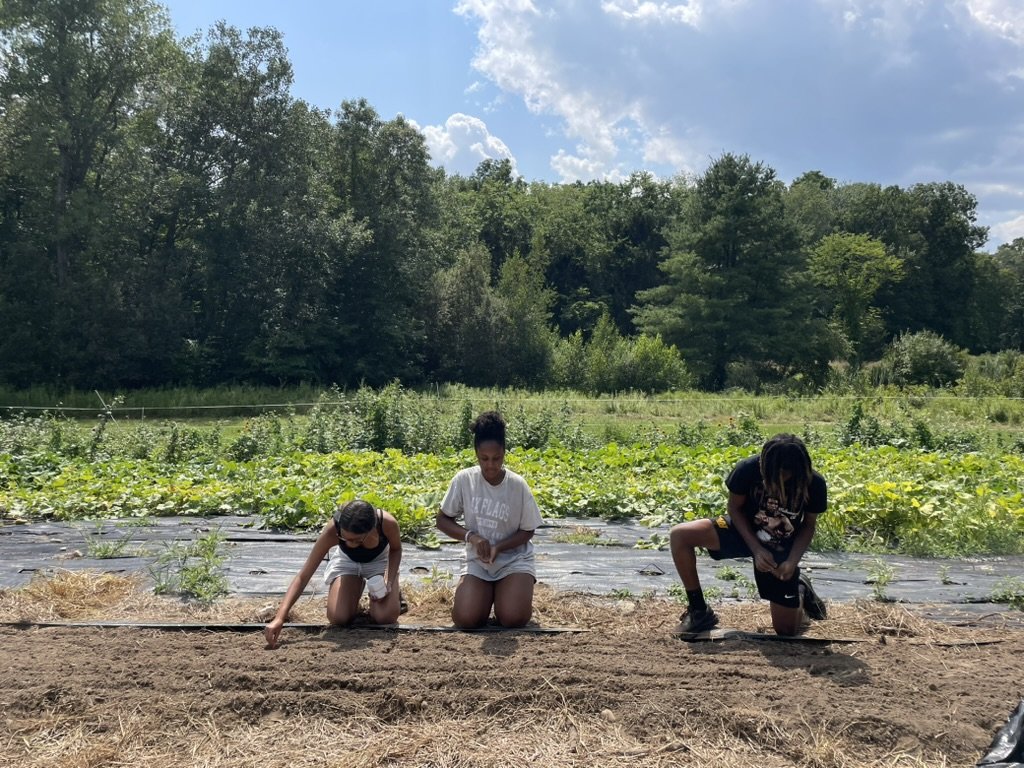
Apprentices Amora, Ava, and Eli seeding in Flower Hill.
Hello, members, another quarter of the year has come and whizzed by!
I had said in my last newsletter that this iteration would be a reflection on the rebuild process, but I think we’ve thoroughly reflected both in person, on our social media, and on the rebuild page of the website. That said, I am still absolutely in awe of what we accomplished and would be simply delighted to meet any of you at the new Farm Stand to chat about the whole process and what comes next, anytime! Please reach out!
Importantly — if you are inspired by our new structures and are considering a new building of your own, please consider working with Country Carpenters, and let them know we sent you! You’ll receive a discount, and we’ll benefit as well. We had such a positive experience with the whole team at Country Carpenters and we highly recommend them and their building kits.
Instead of a rebuild reflection, I invited our Farmer Educator, Gracie Folds, to share her thoughts about this year’s youth program. This was year 6 of our youth program which has grown by leaps and bounds each successive season, and it was Gracie’s second year running the show. Below you’ll read her words about this past season and what we’re dreaming about for 2027.
“This farm has given me tools and experience useful for any future opportunity. Over the years of working here, I have become confident in my abilities to lead groups of people and be a part of community growth. Knowing that I contributed significant amounts of food to people who would not otherwise get it is amazing and honestly kind of hard to grasp. I hope the program grows bigger and educates more people, because I believe everyone should have the opportunity to feel like they’re part of something bigger.” – 2026 apprentice
Long, long ago, in the early days of 2026, we made our crop plan. Curled up with our seed catalogues and our spreadsheets, we were very ambitious. When you’re looking out the window at a cold but sunny winter day, it is almost impossible not to get carried away dreaming about all the things you’re going to accomplish in your season. With our warm beverages and cozy socks, it felt like a no-brainer that we should triple the amount of growing space we work in with our Youth Training program. While we were at it, we figured we might as well triple the number of interns that we take in the summer. We happily watched all of the numbers in our spreadsheets grow: more seedlings, more bedfeet, more stakes, more gloves.
Of course, nothing ever goes to plan– especially on a farm. While we are accustomed to constantly making adjustments, checking the weather, and updating our plans, our farm stand burning down in the Spring changed the trajectory of our year in a way we never could have anticipated or planned for. When it became clear how much of our time and effort was going to be devoted to infrastructural projects, I grew nervous about our growing season. How were we going to do it all?
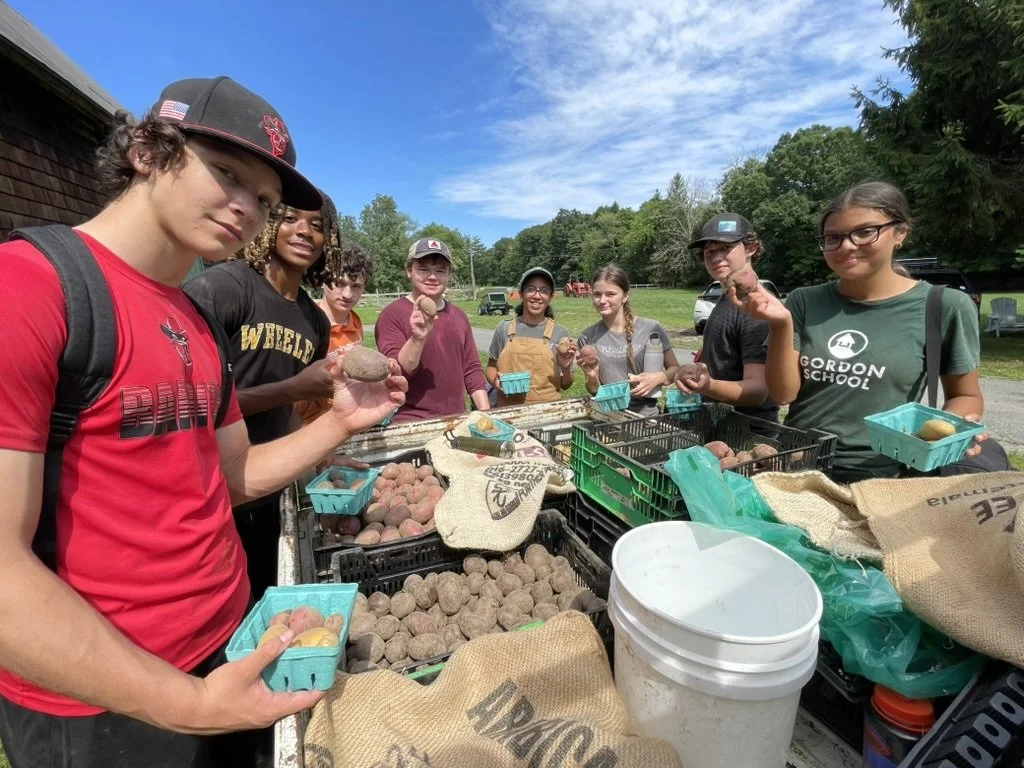
Summer interns and apprentices boxing up potatoes after the harvest.
“I did not think I would like the work so much. I definitely grew as a person on this farm and it taught me to push myself more. I have become more well-rounded and [this internship] taught me things that I have never done at school.” – 2026 intern
Had I known what an outstanding group of young people was waiting in the wings to trade in their summer free-time for the challenges of farming, I never would have been concerned. Our youth training program focuses on empowering young people to participate in their local food systems and this year’s cohort certainly rose to the occasion! We work with students to develop leadership skills, basic farming knowledge and pre-employment competencies through a wide range of programming that includes field work and garden maintenance, volunteering with other resident farmers, participating in hosting field trips, practicing professional communication and job-preparedness, and taking turns leading each other through work activities.
Interest in our youth training programs have been overwhelming and this year was an experiment to see how many students we could meaningfully include in our growing systems. This experiment was hugely successful and our students proved that they were more than capable of producing meaningful quantities of vegetables while they were learning. What a beautiful lesson that I get to learn year after year with our students– you don’t need to have all the answers or all the know-how to be successful when you give something your earnest best effort!
Our students grew enough vegetables to take produce home, to stock our CSA share, and to donate over 1,500 pounds of produce to our partners, the Murray Food Pantry in Attleboro, MA and Open Doors in Providence, RI. We are still bringing in our longer season crops and anticipate reaching the 2,000 pound mark before the end of the year. I could not be more proud.
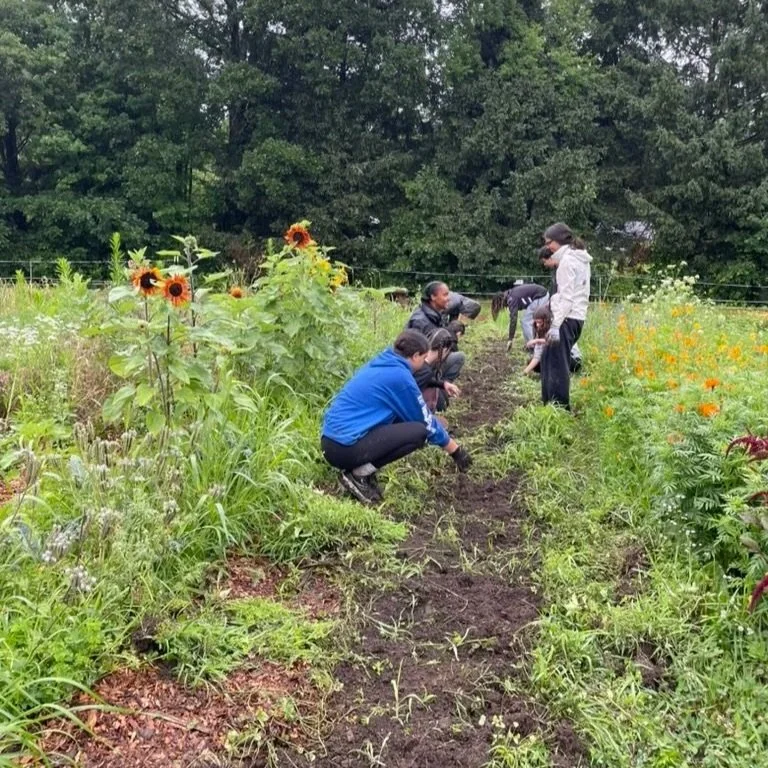
Youth crew happily weekend in the rain!
“One of my most meaningful experiences was preparing a bed and then planting it. I thought to myself I helped weed, spread compost, and put wood chips down so that the bed could be planted in. Then the next week I helped plant the bed. This is meaningful to me because I did a step to make another step possible.”
One of my favorite things about the youth training program is the opportunity that students get to witness the impact of their presence on the farm in a tangible and positive way. In an age of digital school work and asynchronous online environments, the farm requires physical presence in real time. If it is going to rain tomorrow, we have work that must be done today. If we want to plant our seedlings, we must prepare our beds. It is very difficult to get away with taking short-cuts in farming– things that aren’t attended to properly will often continue to haunt you for the rest of the year. I love that our students get to take a break from the abstract and be grounded in the rhythms of life here on earth. As they participate in the seasonality of our ecology here in New England, they get to experience the satisfaction of a job well done. They harvested squash and now there is a mountain of squash in the cooler. They weeded the potato beds and they look completely different from how they did this morning. They water the lettuce and they see plants appear to come back from the dead.
In the grand scheme of things, our farm is a small place. But when so many us feel powerless against all the scary and bad in the world, it is wonderful to see students stop to admire the bees in the flowers that we grow for pollinators. Or to rejoice at the remains of hatched shells in the spots they flagged to protect a snapping turtle’s eggs. Or to pack up crates of peppers for donation. These moments give our students the chance to experience themselves as tangible, positive forces in our environment. Watching our students integrate themselves into our gardens and to take their role as stewards of this land so seriously should give us all great hope.
As a farmer, summer can be a bit of a drag. The heat wears on you and your plants. The days are long but your to-do list is longer, and the extra rest and recovery your body needs after full days and weeks of working in high heat and direct sun feels hard to come by. Our students tough out the most challenging part of the growing season with us. And right when the days grow shorter and milder, they return to school. As we ease into fall and begin to slow, we are already looking forward to getting back into our pajamas and dreaming of the season we’ll create together in 2027.